Chronological Gospels: Luke 18:15-19:48

Chronological Gospels: Luke 18:15-19:48

Chronological Gospels: Luke 18:15-19:48

In this week's reading, we visit Luke's account of Jesus riding into Jerusalem. In this account, a few new things stood out to me. One of the blessings of reading through the gospels in chronological order, side-by-side, is that we get to see things from each perspective consecutively and draw out different details than we would by reading them separately.

One thing that really hit me today was how the disciples rebuked the people for bringing children to Jesus before they had even checked with Jesus. They came to their own decision that these children were not worth bringing to the Lord, maybe that they were a waste of time to someone as important as Jesus. They judged for themselves who should be allowed to come to Jesus. Jesus then used those His disciples had turned away as an example of faithfulness.

Those who do not have faith like a child will never inherit the Kingdom of God. Children are fully dependent on their parents. They trust quickly until they have been taught not to. I think about my kiddo and how when she was little, she was wildly trusting. She would jump on the couch, landing on me knowing I wouldn't let her fall. Even last night she called me to tell me she got hurt and ask what to do. She knew I would answer and provide the help I could. How little children trust and rely on their parents is how Jesus wants us to trust and rely on Him.

What does it teach you about God that He wants you to have faith like a child to inherit His Kingdom?

After this declaration, we get to see several examples of people's response to Jesus and Him calling them to Himself. What struck me today is that not only did Jesus come to save, but He came to seek. We read in John 6:44 that no one can come to Jesus unless God calls them to Himself, and here Jesus says He came to SEEK and save the lost. He leaves the 99 to find the one lost sheep. Jesus wants all sinners, which is every person to ever exist, to be found by Him, called to Him, and saved by Him. He died to save every person, and He seeks all of us to come and follow Him.

What does knowing Jesus came to seek and save you teach you about your relationship with Him?

I love the part about Zacchaeus climbing up the tree to see Jesus. This is a man the people later call out as a sinner and complain about. He is someone who extorted money, cheated people, and made his wealth by greed and deception. Even today our world likes to call out the Zacchaeus's. He was content to watch Jesus pass by from a distance, but Jesus sought Him out. I love seeing the evidence of God planting in Zacchaeus's heart the desire to see Jesus, and Jesus seeking him out. This sinful man was who Jesus then chose to stay with that night, to the judgment and displeasure of the crowd. They complained that Jesus would stay with a sinful man.

While the crowd complained about Jesus declaring salvation over this sinful man who had wronged them, Zacchaeus responded to the Lord by repenting, committing to making right the wrongs he could, and serving the Lord and the poor. Jesus saw Zacchaeus and Zacchaeus responded by letting Jesus change his sinful heart.

How does Zacchaeus's story change how you see yourself or others?

What stood out in particular in this account that you had not seen as clearly in the other gospel accounts?

Chronological Gospels: Luke 18:15-19:48
Chronological Gospels: Matthew 20-21

Chronological Gospels: Matthew 20-21

Chronological Gospels: Matthew 20-21

In Matthew 20 and 21 we begin to see a vital transition in the gospel story. Jesus' whole life on earth was a humble sacrifice but this is where He starts to really reveal Himself in preparation for the crucifixion. We see the events that many now celebrate as Palm Sunday, prophecies fulfilled, and Him having some deeper kinds of conversations with the disciples as well as the crowds and the Pharisees.

A couple of main themes strike me as I read through these chapters with the foresight of what is coming up very soon. As Jesus prepares for His brutal death, He is teaching about humility, generosity, service, faith, and prayer. All over these two chapters, these are the main points that jump out at me which serve as a needed reminder of what it means to be part of His Kingdom.

What are the main themes in these chapters that jump out at you? What does this teach you about Jesus and your own relationship with Him?

Those who choose to follow Jesus are called to be humble servants, to work hard for the Kingdom, and use what God has given to do the work He has called us each to do for Him with His resources. We are all called to go out and be workers of His harvest, and expected to bear fruit from the blessings He has given us to work with. Jesus teaches that those who belong to the Kingdom will produce fruit for the Kingdom.

What are you doing with the harvest God has sent you into?

Matthew 21:12-17 is a part of the story often referenced as an example of Jesus's righteous anger. As I read through this part of the story in the full context of what is happening, I can't help but notice that Jesus took the time shortly before He was arrested to not only cleanse the temple but also invited the "blind and lame" and even the children into the temple. The temple had been defiled by wealth and greed, and not only did He show His disgust at this, but He made a point to invite those that the religious leaders treated as unworthy to come and be with Him in the temple.

Jesus invited the lowly, those whom the culture deemed unwanted, and called those very people to Himself. He put HIs heart and purpose on display at this moment. Not only did He show His righteous anger at the corruption of the temple, but He showed us all what He really wanted the temple of God to be - a place for the lowly to come and seek God. At this moment, Jesus teaches us the importance of prayer, humility, and holiness over worldliness, wealth, and position.

What does this passage teach you about God?

What does this passage teach you about worship and prayer?

What does this passage teach you about your relationship with the Lord?

Chronological Gospels: Matthew 20-21
Chronological Gospels: Matthew 19; Mark 10

Chronological Gospels: Matthew 19; Mark 10

Chronological Gospels: Matthew 19; Mark 10

Every week we get a little deeper, and maybe a little tougher to chew on for some of us. This week's chapters I am reminded of the importance of context. Not only context in the passages surrounding what we are reading, but context within the whole gospel story, as well as the context of the culture in Biblical times.

As you read these chapters, and really as you continue on this journey through the gospels in chronological order, I pose a challenge to you - keep the whole context in mind, ask questions, branch out to other parts of the Bible, keep your heart and mind open to what God wants to teach you, and don't neglect to pray as you read and study. Remember that the Bible is a continuous story versus many chopped-up stories smashed next to each other.

The Bible is relevant to itself all over its vast set of pages. Where man has placed breaks in a chapter or verse, God continues His narrative. Look past the verse and chapter numbers, headlines, and page breaks, and let God show you the connections He wants you to see.

In our chapters this week, Jesus is asked several loaded questions, approached by quite a few people, and explains some tough-to-swallow commands. The main takeaway for me in the entire reading is that we are meant to put Him first, always. Faith is not just obedience but is also sacrifice, service, and even persecution. To inherit eternal life, to receive salvation at the end of the age, we must follow Jesus which will include great sacrifice, humble service, and even suffering along the way in this life. The beautiful thing, though, is that we are also instructed to look ahead to the reward we will have in Heaven at the end of the age. This life will be hard, but the next life - eternal life - will be more than worth it all.

Take some time this week to consider the sacrifices you have made for the sake of Jesus. How has this blessed or transformed you, your life, and your faith?

What is God revealing or teaching you through these passages?

Chronological Gospels: Matthew 19; Mark 10
Chronological Gospels: Luke 17:11-18:14

Chronological Gospels: Luke 17:11-18:14

Chronological Gospels: Luke 17:11-18:14

This week's reading is humbling. Along Jesus's ministry journey, he heals ten men with leprosy. He then told them to go show themselves to the priests, which was the law and custom of the time. If you had leprosy you had to keep away from others, and if you were well again you had to go to the priest for them to bless and cleanse you and then welcome you back into the community.

I love what Jesus says when one of the men comes back to Him and falls down at His feet. The man didn't go to the priest, he came back to the One who healed him and Jesus's response tells us that is exactly what He wanted all of the men to do - praise God for the healing they received.

Describe a blessing you received from God. How did you respond?

He then gives us another important lesson that we all need to take heed of. He was asked when the Kingdom of God would come. His response teaches us that there are multiple phases to the coming of the Kingdom of God and that His presence is essential to every phase.

How does this passage challenge or confirm your understanding of the Kingdom of God? Explain.

Connected to Jesus's lessons about praising God and the Kingdom of God, He then tells a couple of parables about prayer and humility. I love His parable about God answering prayers. His point here is that He wants us to be persistent in prayer, dedicated and focused on giving all matters to the Lord, and trust the Lord to respond how and when He knows is best.

What does this parable teach you about your own prayer life? Explain.

He then tells a parable about two people, a tax collector and a Pharisee, praying and the different ways they prayed. Jesus points out that the one who shows humility is the one God will exalt. The one who exalts himself will be humbled by God because God hates pride. Those who see themselves as justified and righteous need to be careful and seek for the Lord to check their heart.

What does this parable teach you about God?

Chronological Gospels: Luke 17:11-18:14
Chronological Gospels: John 11

Chronological Gospels: John 11

Chronological Gospels: John 11

This week we read through John 11 where Jesus's dear friend Lazarus, brother of Martha and Mary of Bethany, has died. Several times these three siblings are acknowledged as beloved by Jesus. Jesus was told of Lazarus's illness and His response is to pray and wait for God's timing. He waits for Lazarus to die, then goes to see Martha and Mary.

Describe a time you held onto faith even when circumstances were painful.

Jesus traveled to Martha and Mary, having told the disciples He was going to wake Lazarus up from sleep. Upon arriving and speaking with Martha and Mary, Jesus proclaimed that He is the resurrection and the life. Those who have faith in Him would never die. He was declaring that those who have faith would have eternal life.

What does this statement teach us about Jesus?

What does this teach us about who we are through Jesus?

In their grief, the women still show their faith in Him. They knew that God would work through Jesus. Jesus was moved by their faith and brought Lazarus back to life. This moment is a turning point in Jesus's ministry.

Jesus raised Lazarus from the dead, causing many to witness this miracle and believe in Him. Some, though, told the Pharisees who then used this as an excuse to plot against Jesus. The Pharisees were so drunk with their power and position that they looked at all of the miracles Jesus performed and rather than worship they plotted to kill Him so they could keep their power over the people and trusted status with Rome.

Describe a time you saw God at work and missed the point. How did this impact your faith when you realized what you'd missed at the time?

In all of these moments that the Pharisees sought to kill Jesus I am reminded of my own fight against Him before finally coming to Him, but also I remember that even these moments were used by God for His purposes. As the story continues, we see how God used this within the ultimate plan for redemption.

Describe a time in your life when God used unexpected or even painful circumstances that led to good. What did this teach you about God?

Chronological Gospels: John 11
Chronological Gospels: Luke 16:1-17:10

Chronological Gospels: Luke 16:1-17:10

Chronological Gospels: Luke 16:1-17:10

In Luke 16 Jesus tells a series of parables. He begins the chapter with the parable of the unrighteous servant where the man essentially worries he will be caught in his unrighteous deeds and be fired from his position. His response is to go around to all the people who owe his master a debt and shave off a portion of their debt in order to win their favor and hope they will help him in the future.

At the end of the story, Jesus says in the CSB to "make friends for yourselves by worldly wealth so that when it fails, they may welcome you into eternal dwellings." He goes on to explain that those who are faithful with little will be faithful with much, and those who are unrighteous with a little will be unrighteous with much.

This whole parable is a lesson to be future-focused and to have a Kingdom-oriented mindset. In the beginning, the servant was acting unrighteously thinking about his own gains in the moment. Later he is generous and forgiving to others in preparation for the future. We, too, are called to be generous and forgiving with the worldly wealth and resources the Lord provides for us, and use them for Kingdom purposes. We should allow Christ to determine how we use our possessions.

By focusing on serving the Lord with all that we have we will be devoted to Him and be blessed with more to continue to turn around and use again for His Kingdom. When we are faithful with a little, He will trust us to be faithful with more. No matter how much we are given we must remain Kingdom-focused and look to our future in Heaven as our reward and treasure.

How can you serve the Kingdom with what you have been given?

What does this parable teach you about the Kingdom and your role in it?

As Jesus continues His lesson He continues to emphasize the importance of Kingdom values over worldly values. It reminds me of the parable of the sower where one of the places seeds were scattered began to grow, but too many distractions and things of the world came and suffocated the roots and killed the vine.

When we become focused on worldly things and fail to focus on the Kingdom, we fail to use what we have for the Kingdom, and we end up letting worldliness distract us and suffocate the root of faith planted in us. We become our own stumbling block when we let the world tempt us away from Kingdom priorities.

Not only this, but when we fail to use what we have for the Lord's work, we prove to be unfaithful with the resources and blessings He has given us. He gives for His purposes, and if we don't use it for His purposes He will not entrust us with more.

What does this teach you about who God is?

What does this teach you about who we are to God?

Pray and reflect on how God wants to use you, and pray, like the apostles did, for Him to increase your faith.

Chronological Gospels: Luke 16:1-17:10
Call Me Onto the Water Matthew 14:28

Call Me Onto the Water Matthew 14:28

Call Me Onto the Water Matthew 14:28

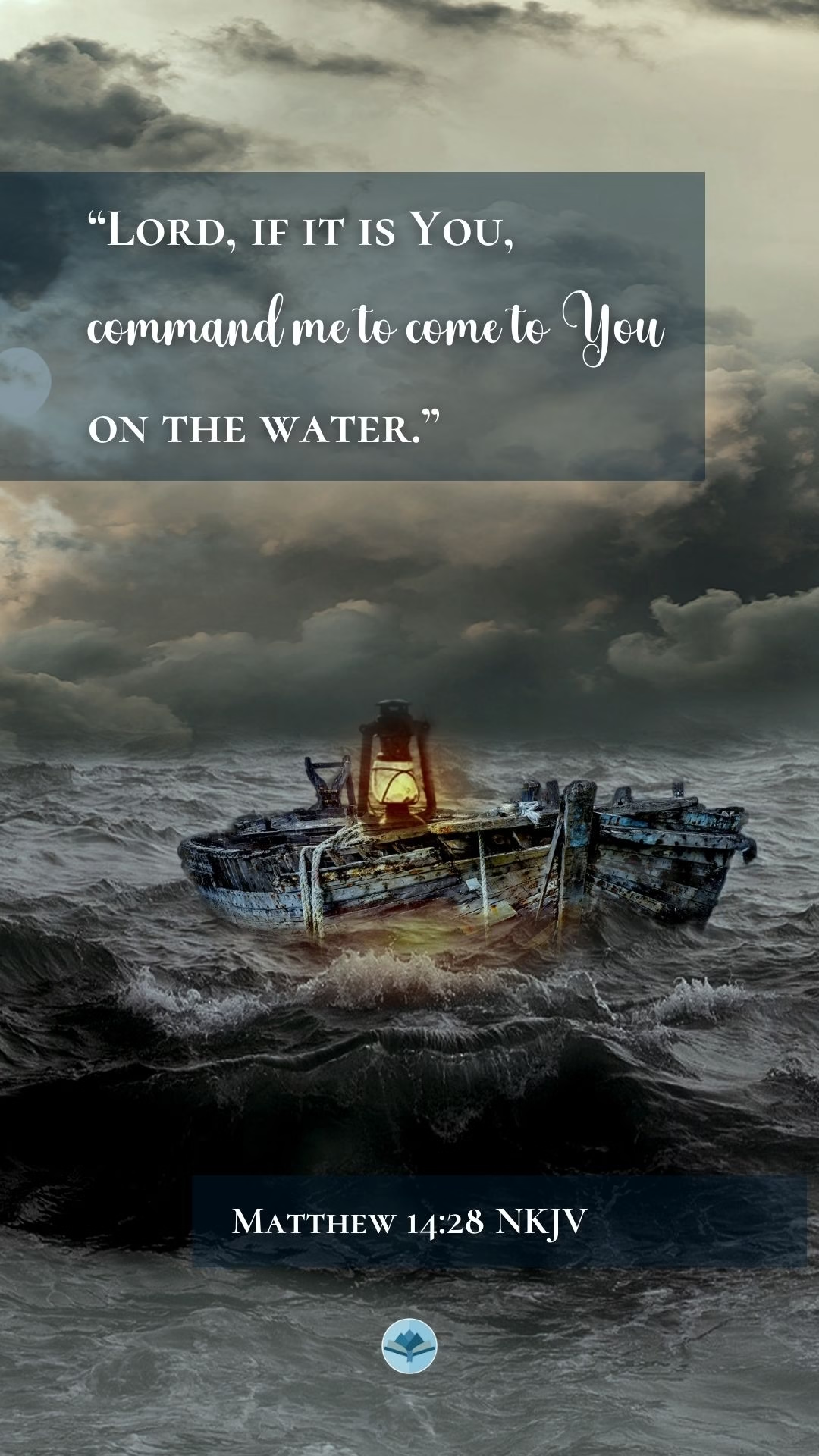
And Peter answered Him and said, “Lord, if it is You, command me to come to You on the water.”

Matthew 14:28 NKJV

This last year has been a spiritual battle for my family. There have been so many trials, lots of health issues, illnesses, doctor's appointments, and quite the journey. We still have little answers and more questions than when we started for both my daughter and myself. My family has been praying over many things - for healing, comfort, strength, wisdom, and also for guidance in what we need to do to get the treatment and answers we need.

I used to be an avid prayer journaler, and would love to still be, but a wrist injury made it difficult to hand write and my deep, personal prayer journaling turned into being in constant, deep conversation with God on a different level than before. I love to pray. I love to pray with others, for others, on my own, anywhere any time. If I didn't have prayer, I don't know where I would be in my life. God has been teaching me and growing me in this season of health issues in ways I didn't know I needed.

Lately, I had been realizing that I really wanted to start prayer journaling again, and have been praying throughout each day for God to help me make sure I am close to Him. I have been praying for God to help me make sure I am ready to hear Him when He speaks to me. I have been praying for God to make sure my heart, ears, and eyes are open to receive Him and obey. I was feeling like maybe, because I had felt so close to God while I had been deep in prayer journaling that maybe my prayer life was dwindling and I was deceiving myself.

God answered many of these prayers and more in one event. I didn't realize it at the time and was completely overwhelmed when it occurred to me. I ended up taking my child to urgent care. The whole experience from start to finish was God orchestrated. God kept showing up, and I realized later that day once I had gotten through the ordeal with my child settled in bed and medicated that I was hearing God all over the place. My habit of talking to God as I go through my day has taught me to listen for Him and recognize His voice on a level I had not realized or experienced before.

My point is not to say how holy and close with God I am, but to say that because I continue to check my heart, check where I am in comparison to where God wants me to be, to seek Him in everything, to talk to Him without ceasing I have been learning and growing my ability to discern Him in the midst of chaos. I certainly don't get it right every time. I certainly miss the mark, say the wrong things, make the wrong choice, and fall into sin more often than I would like to admit. But through this, God comforted me in a way I didn't know I needed.

I think of Peter when he told Jesus "if it is you, call me out onto the water" and Jesus did just that. Peter walked on the water for a little while, but before long he noticed the waters crashing around him and he began to sink. While Peter's eyes were on Jesus, though, Peter walked on water. He was so focused on Jesus that he was able to do the impossible. As soon as he took his eyes off of Jesus, despair hit him and he began to doubt and panic. This is a perfect picture of what it is like to grow in faith.

I feel like lately my prayer has been a similar one - Lord, if it is you tell me to step out onto the water in faith. And of course, He does. He called me into stressful circumstances, He assigns  important things to do for His kingdom, He calls me to care for my family through difficult seasons, He gives unexplainable illnesses and countless specialists, He allows turmoil to take place across my life, and He calls me to serve in difficult ministry seasons and circumstances as well. These are all instances where He calls me out onto the water. I can walk in faith with my eyes on Him, or I can look around me and panic. Sometimes my eyes stray and I start to sense my feet sinking. Every time, I have a choice. Do I look back onto Him, or continue to look at the waves of life crashing around me and sink further?

God loves to show us where we actually are in our faith - not because He doesn’t know, but because He always knows and we don’t. I had been asking Him to show me if I really am close to Him, or if I have drifted away without realizing it. He proceeded to call me out onto the water in several ways all at once. I could have easily turned my gaze to the waves, but I realized later that I am learning and growing to keep my focus on the voice of my Good Shepherd and not be deceived by the trials around me. He is with me through every storm. He is with me on the water. His hand is right there to grab when my eyes lose focus and my heart begins to doubt and worry. I am not a graduate, but I am so humbled to be able to see the work His Spirit has done in me and recognize how far I have come from who I was before Him to who I am now, yet also recognizing I have a long way to grow still.

When life is crashing around you, are you getting out of the boat? Are you keeping your eyes on Jesus? When you inevitably, like me, look away from Him, do you cry out and reach for Him again? What waves are you focused on right now that are keeping your focus from Jesus?

Let Him continue the work He is doing in you. We're all far from the perfection that awaits us in Heaven, but the growth He is working in us will help us to navigate this stormy world, glorify Him through even the darkest trials and valleys, and draw us closer to Him than we could ever dream to be. Draw near to Him, and He will draw near to you. Get so close that when the waves do crash, you hear His still small voice and don't hesitate to recognize the voice of your Shepherd calling you closer to Him. It is a process of developing that personal, intimate relationship with your Savior, and it is worth the investment.

Call Me Onto the Water Matthew 1428 Devo PIN
Provision with Proper Alignment Isaiah 58:11

Provision with Proper Alignment Isaiah 58:11

Provision with Proper Alignment: Isaiah 58:11

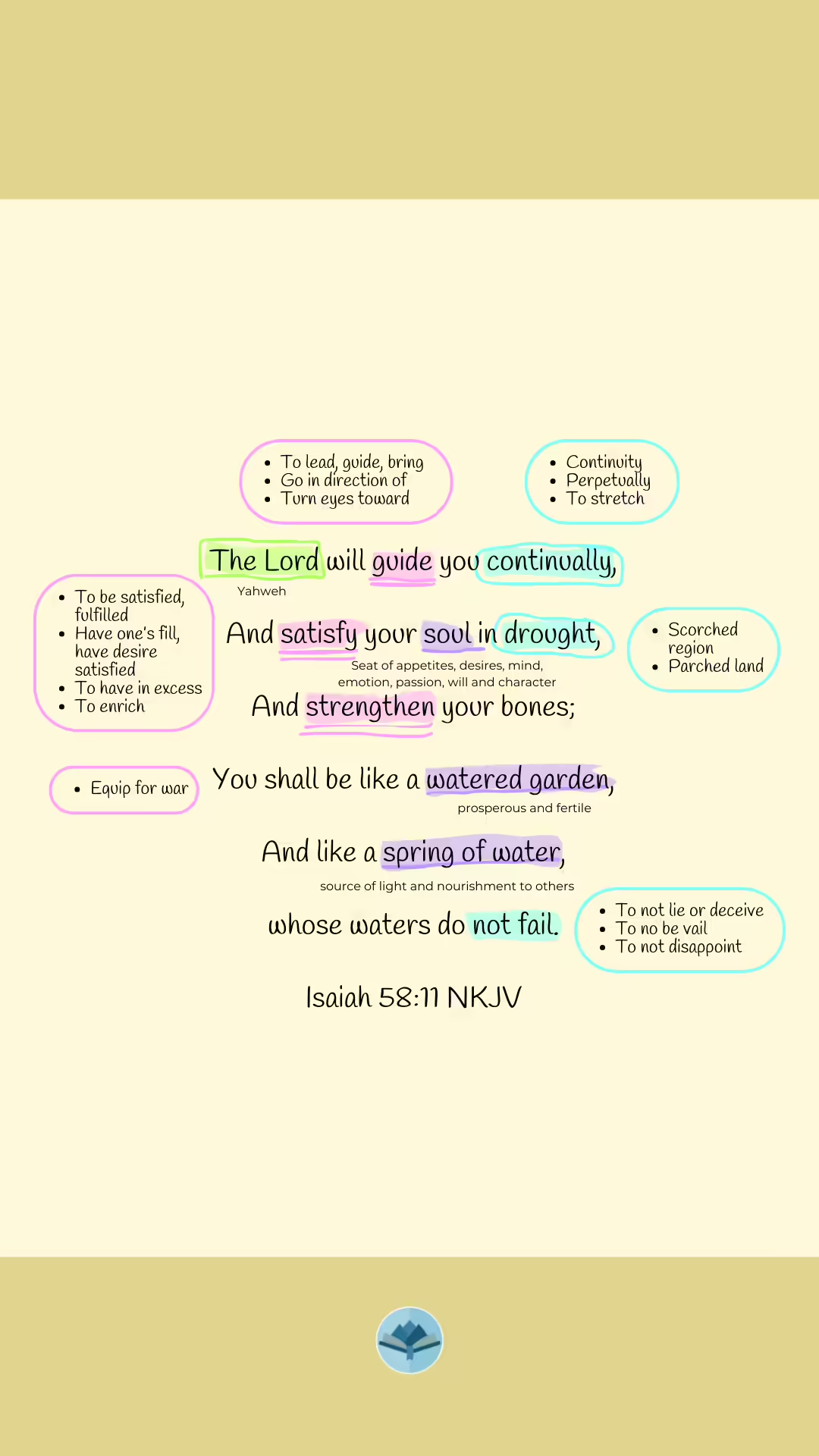
The Lord will guide you continually,

And satisfy your soul in drought,

And strengthen your bones;

You shall be like a watered garden,

And like a spring of water, whose waters do not fail.

Isaiah 58:11 NKJV

Sometimes we come across a passage that breathes much needed encouragement into our weary souls. We all have those verses we meditate on, could post on our fridge, print on a t-shirt, or set as our phone background - those personal favorites we cling to. When you think about your go-to verses, can you go beyond that one verse? When you quote it to someone in need of encouragement, can you tell them why this verse is so important within the context of its entire passage?

Isaiah 58:11 is one of my verses, but as you read it and are likely, like me, very encouraged by it, I am inclined to go beyond this singular verse and recognize that the true encouragement is held in the surrounding verses.

At this point in the Prophet Isaiah's life, he has been relaying God's warnings to the Israelite's for a long time. Chapter 58 begins with God commanding Isaiah to go tell His people that He sees what they are really doing and knows the selfish motivation in their hearts. God tells Isaiah to call out the people's sin and tell them yet again that there are consequences for wickedness.


The people have been putting on a show of obedience and piety, but God knows that their motivations are self-centered and self-seeking. They disregard what God commands, yet go on doing things that they expect to influence God to give them what they want. They disobey God all while trying to manipulate God into granting their selfish wishes, like He is a genie in a bottle.


We can easily look at the Israelites and say "shame on them!" In truth, however, we are all too often caught doing the same thing. Do you read the Word daily in order to have a personal relationship with God? Do you pray for God's will to be done, and are content with His will over your own? Do you show off the good things you are doing in His name or expect some thanks or recognition for your service to the Lord? Do you point out what others are doing wrong, yet make excuses for the ways you disobey God? Do you show up at church or attend a Bible study because you feel obligated or to make friends, but not to grow in the Word and with God? Are you refusing to go beyond the spoon-feeding stages of your faith? Are you refusing to be used by God for His purposes? Is there an area of your life that is off-limits to God? Are you willing to do uncomfortable things to serve God?

Isaiah 58:11 is a promise from God that He will guide His people, satisfy our souls, and make us prosperous and blessed. But here's the catch - God is telling the Israelites, and future generations of believers, that blessings come to the obedient. When you are living in authentic relationship with the Lord, walking with Him, loving Him with your life, living in obedience to Him because of your love for Him, and doing the uncomfortable things He calls you to do, He promises to bless you, provide for the work He calls you to do, and make you prosper in the ways He desires.


This is not a promise of provisions and prosperity in exchange for good works. This is not a promise of granted wishes for piety. This is not a promise of a trouble-free life. This promise is God telling us that when we put Him first, He blesses us, provides for us to do the work He assigns for us, and that by living in faithful obedience to Him and prioritizing His will, we will prosper in ways that will allow us to pour out His blessings beyond ourselves.


We must be selfless in order to be truly used for God's purposes. Before we can expect blessings from God, we must repent and turn to Him and His ways, and away from our own self-seeking ambitions and self-absorbed behavior. We must allow Him control and sovereignty over every area of our lives, and love and serve Him the ways He teaches and commands us to do.


Only when we are in proper alignment with God can we expect to receive what He promises to the righteous. It will not always, and honestly rarely will, show up in the ways we might expect or prefer, but God knows all things and will always provide and bless in the ways He knows is best for His purposes and glory, not our own selfish preferences or short-sighted wishes. He is the First and the Last, the Alpha and Omega, and He knows how to work all things together for the good of all who love Him.

So, what is God calling on you to do? Where is He convicting you to repent and surrender to Him? Where does He need your focus to change? What hardness in your heart is He working to chip away and soften?

Where He calls you to go, He will not only provide for you but He will go with you. He is all you need, so He will never abandon you - even in the times you cannot sense Him, He is there with you and desires you to earnestly seek Him, draw near, and do His will all while laying your own will at the foot of the cross.

When I am obedient to God and my focus is on Him; when I am repentant and selfless, the Lord will perpetually guide and stretch me, turning my eyes toward Him, and my desires will be satisfied in excess. The very seat of my emotions, character, will and desires will be equipped for spiritual warfare, transforming me from a parched land of self-centeredness into a prosperous and fertile source of His light, life and nourishment to those around me so that I will not disappoint Him, hurt others, or lead them astray in selfishness.

Provision with Proper Alignment Isaiah 58:11
When, Not If: 1 Peter 2:11-12

When, Not If: 1 Peter 2:11-12

When, Not If: 1 Peter 2:11-12

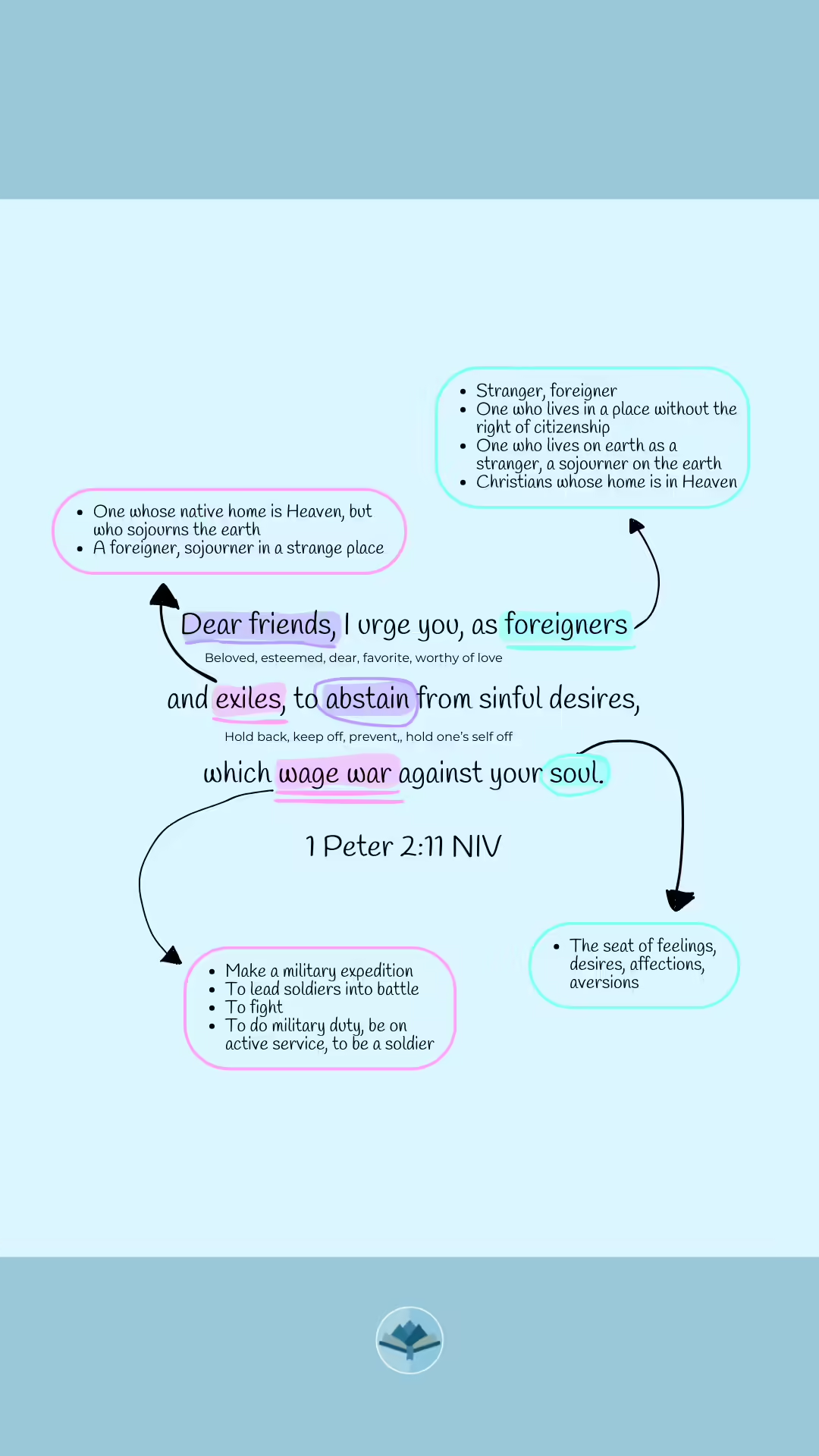
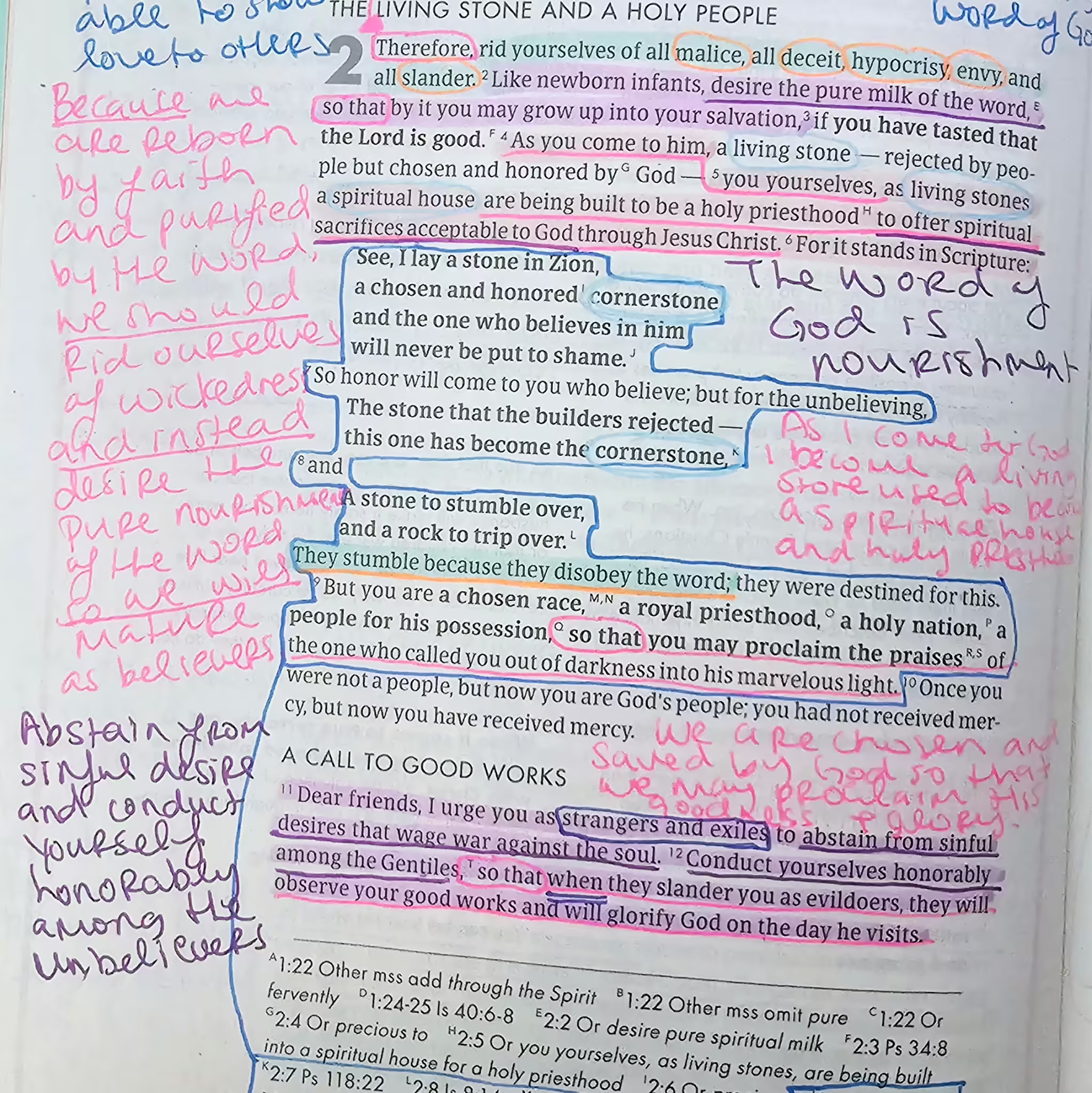
Beloved, I beg you as sojourners and pilgrims, abstain from fleshly lusts which war against the soul, having your conduct honorable among the Gentiles, that when they speak against you as evildoers, they may, by your good works which they observe, glorify God in the day of visitation.

1 Peter 2:11-12 NKJV


Have you ever felt like you don't belong? Ever feel like this life doesn't make sense and you just can't seem to fit in? That actually is a good thing. For believers of Jesus, we are not supposed to fit in. We are not supposed to belong in the world. We are merely travelers passing through on our way home to Heaven. If you are a believer and you are focused on fitting in, you are focused on the wrong thing, and a very dangerous thing it is.

Peter gets a lot of flack. He was the disciple who told Jesus he would die for Him, but then denied Jesus when things got scary. He responded in such painfully relatable ways to Jesus' teaching and instructions, and situations the disciples were put in, but not the things we like to relate to. After the death, resurrection, and ascension of Jesus, Peter became a leader in the new church. He grew and matured in faith and confidence, and he ended up suffering immensely for it. He knew what it meant to not want to stand out, and then later learned he must stand out for the sake of Jesus no matter the cost. Eventually, it cost him his life.

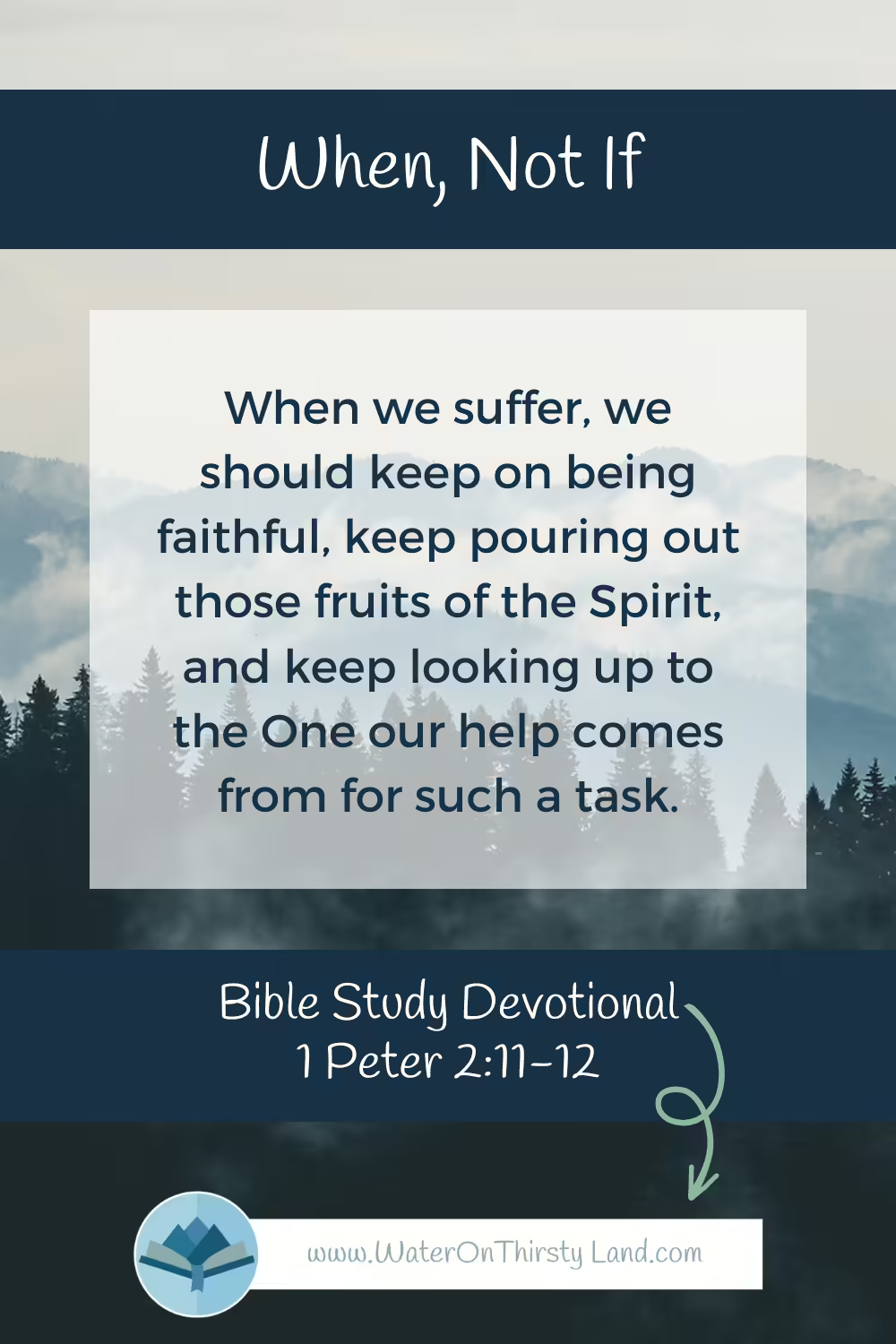
In this life, followers of Jesus will suffer. We are in the thick of a war over our very souls, and everything we do is being judged by the world around us. The world wants to condemn us, and we are warned that when…not if…when we are persecuted, when people speak evil against us, when we are slandered and mocked, when evil is targeted at us, we are to keep on going the good work Jesus teaches us to do. When we suffer, we should keep on being faithful, keep pouring out those fruits of the Spirit, and keep looking up to the One our help comes from for such a task.

Scripture is filled with encouragement and commands about how we are to live as followers of Jesus - to love, to forgive, to be gentle, kind, and patient. These instructions are not just for when it is easy. These are commands for us to stand on and hold fast to when it is difficult; for the times we really want to react in frustration rather than respond in love.

1 Peter 2

Christ knew all along how hard it would be for us to respond His way rather than react in the way that feels natural to us. This is why He left us His Helper, the Holy Spirit, whose job it is to sanctify us, convict us, and transform us. It is our job to respond to the promptings of the Holy Spirit and allow ourselves to be used by God, for God, to bring Him glory through the way we live, speak, work, and respond to all that the world throws at us.


So the next time someone says something unkind about you, accuses you of something, picks you last, pushes you out, or knocks you down - look up and seek His strength to do the difficult thing and respond in the way that will bring God glory. Seek His help standing out to be set apart for Him, unashamed, unafraid, ready to defend your faith and take the hit knowing you have Heaven's armies fighting this fight alongside you, and a whole court of heavenly hosts cheering you on and praising God all the more for the work of His Spirit working in you.


How do you need to respond to the promptings of the Holy Spirit better? How is He calling you to be set apart today? Where do you need to let go of the world and cling to the Lord? What areas of your life are you neglecting to give God the glory? Where are you more focused on earthly things and God's glory?


Surrender it today. Give way to God's Spirit. Give Him access to all of it, and let Him lead you through this life in which you are merely passing through. Don't make this place your final goal and destination. Set your eyes, heart and mind on the hope we have ahead for us in Heaven.

When, Not If 1 Peter 2:11-12
Give Thanks to the Lord: Psalm 106:1-3

Give Thanks to the Lord: Psalm 106:1-3

This Week in the Word: Give Thanks to the Lord

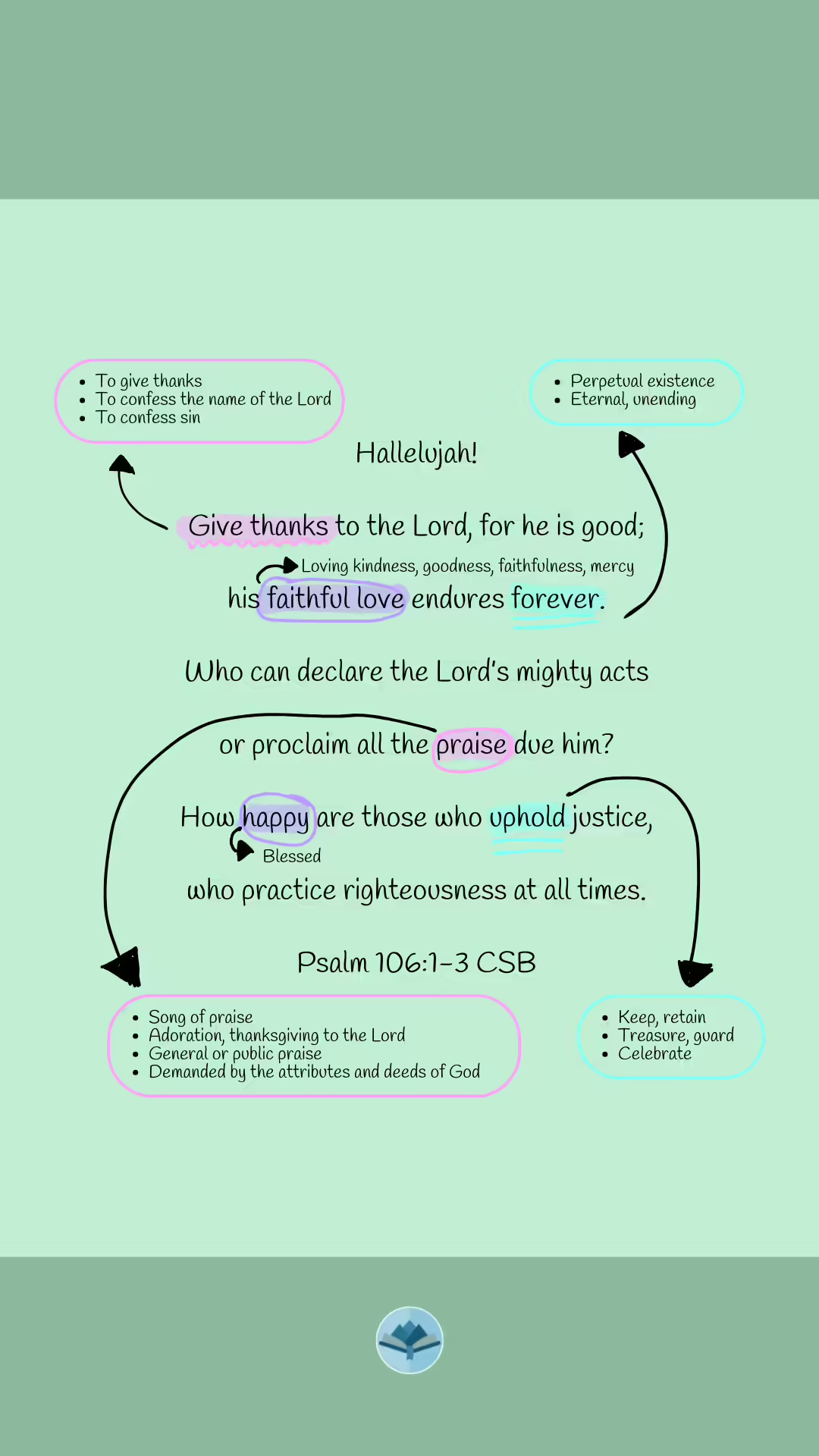
Hallelujah!

Give thanks to the Lord, for he is good;

his faithful love endures forever.

Who can declare the Lord’s mighty acts

or proclaim all the praise due him?

How happy are those who uphold justice,

who practice righteousness at all times.

Psalm 106:1-3 CSB


Scripture has a tendency to be pretty repetitive. Sometimes, we catch ourselves thinking "haven't I read this already? Can't I just skip this part? They've talked about it like 15 times already!" It can be easy to skim or skip parts of scripture that on first glance seem redundant or unimportant.

Psalms 105 and 106 are a couple of great examples of passages where this can happen. In Psalm 105, we get a log of Israel's history, and then in Psalm 106 we get a continuation where we read more of the history and again about how sinful the Israelites were. There are whole books dedicated to this history. Why do we need to read it again and again?

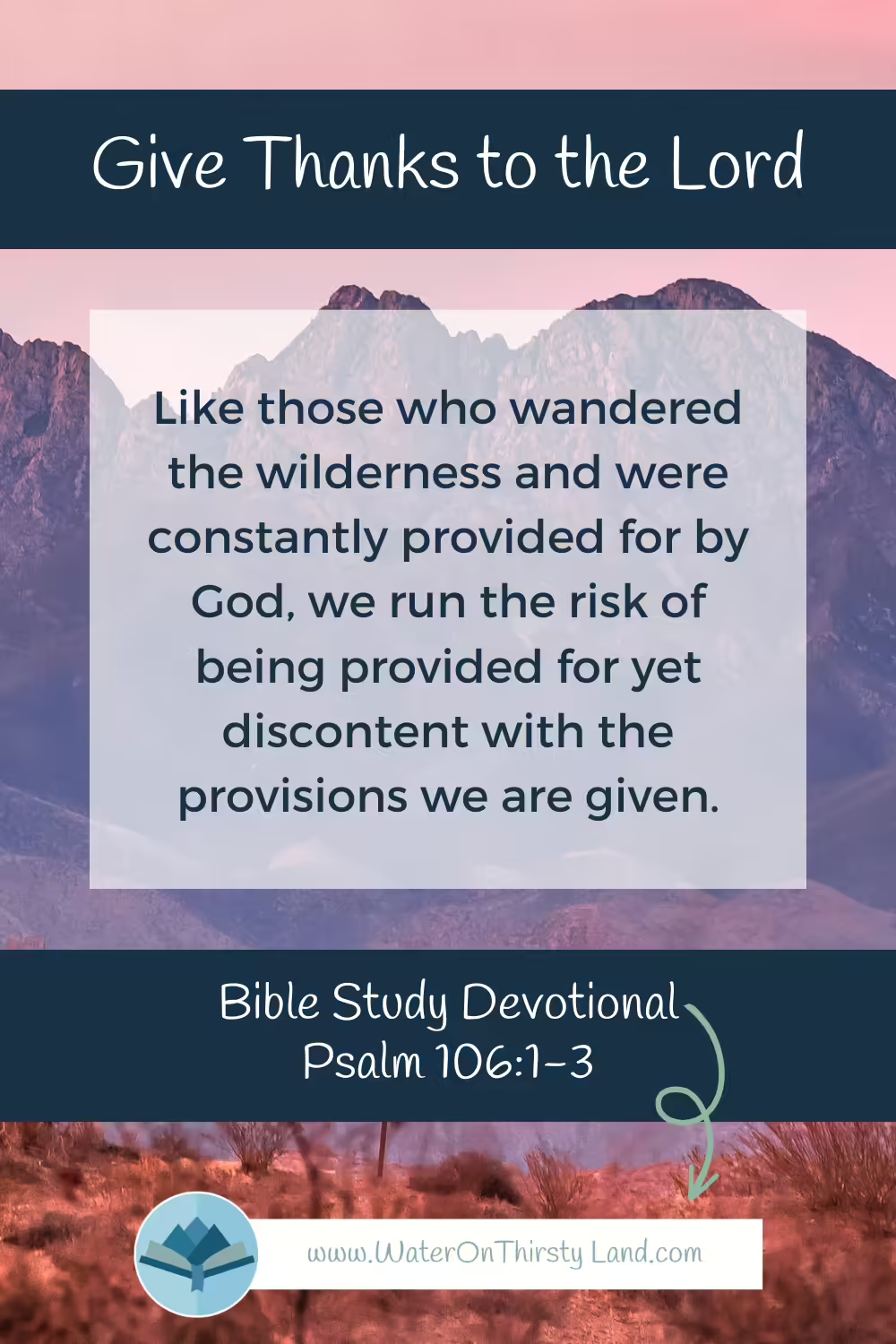
Much like the Israelites, we need the reminders of our need for grace. Like those who wandered the wilderness and were constantly provided for by God, we run the risk of being provided for yet discontent with the provisions we are given. And also like the people of ancient times, we need to be reminded constantly of our need for God and His goodness and plans, and the repentance of our own sin and wickedness.

These chapters and songs remind us again and again of the need for Jesus and what He did for you and for me. These tedious repetitions are there what feels like a million times throughout this massive text that is the Bible because we need the million reminders. This is an example of the grace of God who knows our needs further, deeper, wider than we know them ourselves and constantly gives us reminders of our need to help us draw closer to the source of our help and hope.

Psalm 106 Bible Notes

God constantly reminds us how much we need Him, and how much He provides for us out of His love for us. So as we for the 5,768th time read about the Lord's faithful love having no end, we can be encouraged yet again that when we sin, His faithfulness still hasn't run out. Reading again for the 7,457th time how those who treasure and guard God's law and justice are blessed and happy, we remember that it is because He gives us our peace and provision.


I've read the Psalms through several times, but I never stop growing in my appreciation for these reminders. Why? Not because I am more righteous than you, or so much stronger in my faith than you - but because I am just as needy of the grace and mercy of God and the salvation of Jesus Christ as you. The Psalms are a beautiful reminder of what the depths of my soul really lack and actually need every day - the goodness, faithfulness, and mercy of God that perpetually exists and has no end because my need for it also has no end. I thank God He knows me better than I know myself and provides for me based on His understanding, not mine.

Give Thanks to the Lord
Triumphant War-Cry: Psalm 98:4

Triumphant War-Cry: Psalm 98:4

This Week in the Word: Triumphant War-Cry

Make a joyful noise unto the Lord, all the earth:

make a loud noise, and rejoice, and sing praise.

Psalm 98:4 KJV


I cannot even count how many times I have heard it quoted about those who are not vocally inclined but throw their hearts into worshiping the Lord in song. Looking deeper within the words of this much-quoted passage, however, we learn so much more about this command than to simply sing even if our voice cracks.

You've likely seen some movie or another that portrays a medieval battle where the soldiers run into battle screaming something along the lines of "FOR THE KING!" You can imagine it in your mind's eye, the running, weapons raised and ready, eyes set on the enemy, determined to attack and have victory. The cry goes up as they hit the ground running, and the cry encourages and emboldens those behind them to take up the shout and run behind them toward the battle ahead, banding together for their master.


It is contagious, and it is exhilarating. This cry is piercing, and if taken up by enough of the army, if it has the effect the commanders and generals are aiming for to enflame the hearts of their soldiers for the battle ahead, if it is loud enough and piercing enough, it also insights fear into the enemy.

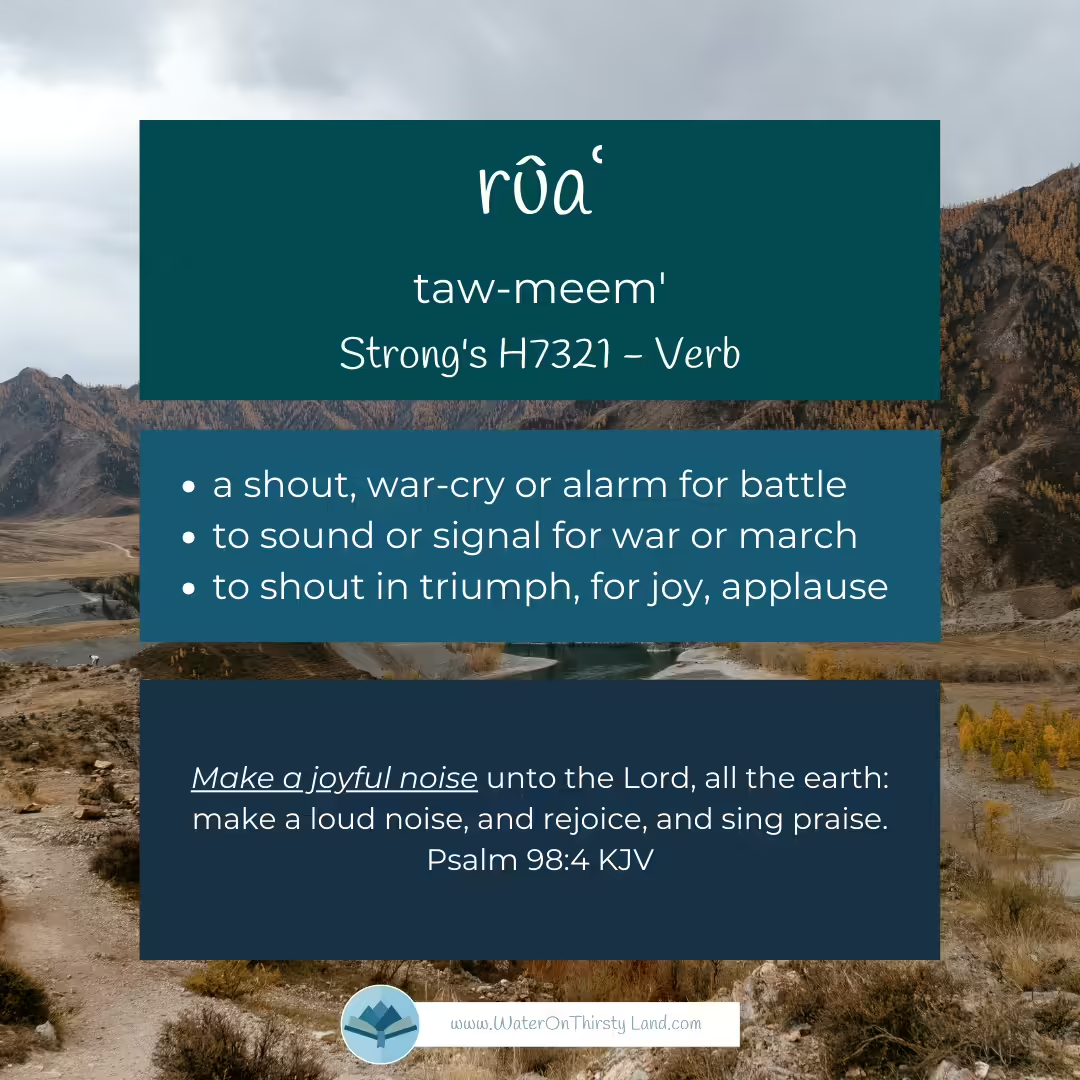
rua H7321

This war-cry is a shout of victory. It is a call for soldiers to stand and fight together as one under the banner of their master. It is a declaration of who you are standing for and fighting with. It is a shout of confidence in the side you chose.


To "make a joyful noise" is to "shout to the Lord". This shout, this joyful noise is a war-cry. We are commanded to worship the Lord as if taking up the war-cry of the Lord's army, ready for the spiritual battles we face every day. When we worship, we are declaring war on the enemy. When we sing God's praises, we are shouting triumphantly in the face of the enemy, running in for the kill swords raised, together, as one, united in Him, confident in the victory He has already won.


Worship is our war-cry. Lift up a war-cry for the Lord, our King who is coming to judge the earth righteously and fairly. Shout for Him who is faithful and calls on us to be ready at all times for battle. Make a joyful noise for the King of Kings and Lord of Lords who goes before us, behind us, and beside us into every battle we fight under His banner. He never leaves or forsakes us, is with us wherever we go, and provides us with His own armor to run to the battle and cry out for His glory and praise.

Triumphant War-Cry
Vow of Integrity: Psalm 101:2

Vow of Integrity: Psalm 101:2

This Week in the Word: Vow of Integrity

I will pay attention to the way of integrity.

When will you come to me?

I will live with a heart of integrity in my house.

Psalm 101:2 CSB


Integrity. In English, to have integrity is to adhere to moral and ethical principles; to have sound moral character; to be honest. When exploring the depth of this word in the Bible, we find that to have integrity also means to be entirely in accord with truth and fact; to be complete, whole, sound and healthful; to be innocent and unimpaired.

Integrity at its full capacity is what the Lord requires of His children. Jesus is the Truth, and we are called to be entirely in accord, in agreement, and in harmony with Him. On our own, this is impossible. We are inflicted by the presence of sin which demands "our" way, desires and preferences over those of a Holy God. This is why we need Jesus.

When Jesus is our Savior, His Spirit lives inside us. When His Spirit lives within us, we are given the ability to know the thoughts, desires, and will of the Lord. Not only this, which is more than we could ever dream or deserve, but He gives us access to His power so that with His help we can grow in integrity in this fallen world. By His power, and only by His power, we are able to walk with Him out of love, and abide in His ways that are higher than our own.

Integrity H8549

He calls on us to be set apart, to be uncommon and unconformed to this fallen world. This world is filled with the effects and evidence of sin and wickedness, prizes "your truth" and "my truth" as separate and acceptable, and rewards getting ahead in whatever way works quickest and with the most benefit to "me". We are not meant to succeed by the standards of this wicked world, but to seek the kind of success that leads us to one day hear "well done my good and faithful servant."

As followers of Jesus we are commanded to follow His example of integrity by tapping into His power to do so. On our own we will fail, but by walking closely with the Lord, hand in hand, eyes and ears on Him, with a heart ready to obey His will, a mind ready to glorify Him in selflessness, He will succeed in us and be glorified through the integrity we bear in this world of temptations and tempers.

Vow of Integrity
Chronological Gospels: Luke 14-15

Chronological Gospels: Luke 14-15

Chronological Gospels: Luke 14-15

In Luke 14 and 15 Jesus teaches through many parables. The very first lesson of Luke 14 is about the Sabbath. The Pharisees had made many rules and regulations regarding the Sabbath and turned it from its intended day of rest and rejuvenation to a day of stressful and seemingly impossible restrictions on the Jewish people. They had made it clear the Sabbath rules were more important than spiritual matters and miracles, and here in Luke 14 we see Jesus again address this matter.

Jesus healed a man and then proceeded to tell the Pharisees how hypocritical their Sabbath laws and actions were. He pointed out that they'd of course save a son or even an Ox if he were injured on the Sabbath, but that they get angry when Jesus performs a healing miracle on the Sabbath. These moments in scripture lead me to reflect on my own heart and intentions about my personal Sabbath day of rest.

How do you take a Sabbath day of rest, and what might you need to change about it?

Jesus then goes on to teach in parables about the value of humility and generosity. What struck me also is that these parables also teach on the importance of heeding God's invitation to Himself. We are all invited to the table, but if we decline His invitation we deny His blessings, provisions, and a relationship with Him. Eventually, there will be no more invitations.

What stands out to you in these parables about who Christ is and your own relationship with Him?

As sons and daughters of the King of kings we can find much in common with these parables. The parable of the prodigal son, for instance, has 2 examples of sons that we can learn from. One, the younger, is the prodigal most can relate to in some way. We can be encouraged in that God is like the loving father who welcomes his prodigal son back with love and joy when he returns with a repentant heart.

The other son is often overlooked but serves as an important example as well. Whenever I read this story, I pray that my heart is not like the older brother who was feeling bitter and entitled, and in this seems to harbor unforgiveness toward his repentant brother. Not only this, but this son displays that he serves his father with ill intentions. He only seeks what he can gain and is bitter at what he feels is a lack of reward for his service. I pray I serve my Heavenly Father with a heart of grateful service and not fall into the bitterness this son displays toward his father.

What encouragement do you find in these parables today?

Be encouraged that you have a Heavenly Father who loves you, cares for you, and rejoices with you when you come to Him in repentance and humility. Blessed are those who show generosity, forgiveness, and kindness to others, and who encourage others to draw near to our Heavenly Father who is ready to forgive and restore His lost sheep.

Take time to pray on these lessons and meditate on them, remembering who God truly is and who He calls you to be - His child whom He loves.

Chronological Gospels: Luke 14-15
Chronological Gospels: Luke 12-13

Chronological Gospels: Luke 12-13

Chronological Gospels: Luke 12-13

As we read Luke 12 and 13 this week, there are many important lessons for us to meditate on and apply to our lives. Jesus is teaching in many different cities, and tensions are rising all around Him. His disciples are with Him, and the Pharisees continue to push back against Jesus. At the start of Luke 12, Jesus gives a blunt warning not only to the disciples who traveled with Him but also to us today - beware of hypocrisy. Guard yourselves, and be aware that everything hidden will one day be fully revealed. God is not fooled by us.

He goes on to say that we should not fear people who can kill the body. The only fear we should have is of God. Fear is mentioned quite a few times in this chapter, but not every time does it mean the same thing. What Jesus is saying is to not be afraid of people lest they be displeased and do harm to you, but to fear God in this way. He then continues on with the exhortation to not be struck with fear and seized with alarm because God counts us as more valuable than even the sparrows.

We are to fear God in a way that is in awe and respect, but also in a way that we do not want to displease Him. We do not, however, need to be in fear and alarm toward God. When we feel anxious or afraid, Jesus invites us to look at His creation and see how God provides for all, then recognize that He provides and cares for us, too.

What does this passage teach you about the fear of the Lord?

In the same conversation, Jesus then proceeds to explain that not only should we not be afraid of people, and that we should desire to please God and trust Him to provide for us, but that we also should not be afraid or neglect to acknowledge Jesus before others, nor should we blaspheme the Holy Spirit. We should likewise be careful against greed and set our desires on the Kingdom of God and Heavenly things.

What does this passage teach you about who God is?

God continuously provides for all of His creation and wants us to trust Him to lead, guide, and provide for us. He wants us to use what He blessed us with to be rich toward Him and generous toward others. We must be careful not to store up treasures for ourselves and neglect our duty to hospitality and generosity. Becoming too focused on earthly wealth is a sure way to lose focus of the true treasure we have in Heaven.

In fact, Jesus explains to us that the cure for anxiety is to have faith and trust God to provide and to be generous with what He does provide. Seek His Kingdom, and do what is pleasing to Him.

How can you focus more on the Kingdom and less on earthly things this week?

How can you be rich toward God and generous with the blessings He has given you?

In all of this, we can learn how to better prepare for Christ's return, the time of which we do not know. He calls on us to be prepared, to have faith, to trust God's provisions, and seek His Kingdom. We must do the job He has given us to do and be found doing it when He returns.

What steps can you take to prepare for Christ's return so that you may walk through the narrow door before it shuts?

Chronological Gospels: Luke 12-13
Chronological Gospels: Luke 10; John 10:22-42

Chronological Gospels: Luke 10; John 10:22-42

Chronological Gospels: Luke 10; John 10:22-42

This week's readings gave me quite a lot to think about and I hope the same will be said for you. We catch up with Jesus in Luke 10 when He sends out 72 disciples in pairs to proclaim that the Kingdom of God is near, and to perform miracles in Jesus' name by the power Jesus granted them.

The very beginning of Luke 10 is a wonderful example of what we can be praying for, and also helps me to align my heart with the Lord. Jesus tells them that the harvest is abundant but the workers are few, and encourages the disciples, as well as us now, to pray that workers will be sent out into the harvest. We should pray likewise over how we are to be workers in the harvest.

Take some time to pray for workers to be sent out into the harvest, and for your own part in working the harvest.

The next part is a needed reminder with this prayer. We are not responsible for the response of others to the message of the gospel. Just as Jesus tells the disciples to shake the dust off their feet, we too should do likewise. Our responsibility and calling is to proclaim, and it is the responsibility of the hearers to hear and believe. If they do not, that is up to the Lord to do His will with them.

When the disciples returned, Jesus encouraged them not to praise the works they did in the name of the Lord, but to praise the fact that their names are written in Heaven. Another valuable lesson for us today. Be humble and give all the glory and credit to God, rejoicing in that He chose us and made us part of His family. Our reward is in Heaven. Jesus then gives another beautiful example of prayer.

What does this passage teach you about prayer?

After this, someone asks a series of questions that help us to learn more about how to inherit eternity in heaven, and likewise how God calls on us to love. To inherit eternity with God we are to love God with our whole selves, and also love our neighbors as ourselves. The question seems to be asked often who counts as our neighbor, and Jesus actually gives us that answer. He tells the parable of the Good Samaritan, and then asks who in the story is the neighbor.

What does this teach you about who your neighbor is and how to love them?

I love seeing this passage where the man given his sight rebukes the Pharisees. We so often put religious teachers and scholars on a pedestal and don’t correct people we have been trained to think know more than we do. This man, though, boldly proclaims what he has been taught from scripture and believes about Jesus despite the Pharisees’ power and responses. Sometimes we need to be reminded that God gives wisdom to those who truly desire it for the right reasons, and will be with His people. This man given his sight is an incredible and inspiring example.

Who in your life has inspired and encouraged you to be bold in your faith? Explain.

After Jesus teaches us to love those who show us mercy, He moves on to stay with Mary, Martha. Mary sat at Jesus' feet to listen to Him, while Martha was distracted with hosting. Martha in her distraction misses Jesus' teaching, and scolds Mary, asking Jesus to make her help.

How does this story apply to your own life?

In John 10:22-42, Jesus explains that His sheep hear His voice, know Him, and follow Him. His sheep are in His protection. He also explains to those who have seen many of His miracles and still don't believe that He and the Father are one. He also explains that if they won't believe by His words, they should believe by His works. This struck me as an example of faith and works. Works that are evidence of faith have power to plant seeds for the gospel. For Jesus, He did miracles by the power of God to bring some to belief, and some believed simply by His words. Likewise is still true about the workers going out to harvest. Some that we meet will be convinced by the works we do in His name, and some by the Word we proclaim in His name. Those who hear and recognize Jesus will know and obey Him.

Chronological Gospels: Luke 10; John 10:22-42

Pin It on Pinterest